

You left the accident scene feeling fine, but now, days or even weeks later, you’re in serious pain. The question: my accident victims ask is “Can I still file a car accident claim if my pain only started months later?” This post explains everything you need to know about delayed injury claims and your legal rights.
Yes, You Can Still File, But Timing Matters
Absolutely, you can file a claim even when symptoms appear later. Insurance companies and courts recognize that delayed injuries are medically legitimate and incredibly common after car accidents. However, you’re working against the clock.
- Check your state’s statute of limitations
The statute of limitations typically ranges from one to six years, depending on location, setting a hard deadline for filing personal injury lawsuits. For example, in North Carolina, the statute of limitations is three years.
- Report the accident immediately
Most insurance policies require notification within 24 to 72 hours of the collision
- File even without symptoms
Report the accident right away, then update your claim later when injuries manifest
- Don’t wait to start the process
Missing deadlines means losing your right to compensation entirely, regardless of injury severity
How Do I Prove My Delayed Injuries Are Real?
This represents your biggest challenge. Insurance adjusters may question delayed symptoms, suggesting you’re exaggerating or that something else caused your pain. However, the data shows that delayed pain from car accident injuries is common. You can back your claim with comprehensive evidence, including X-rays, doctors’ notes, and insurance paperwork.
Get immediate medical evaluation

Even if you feel fine, this creates a baseline and establishes that you took the collision seriously
Document symptom progression

Medical records showing the timeline from initial impact to current condition prove invaluable
Obtain medical explanations
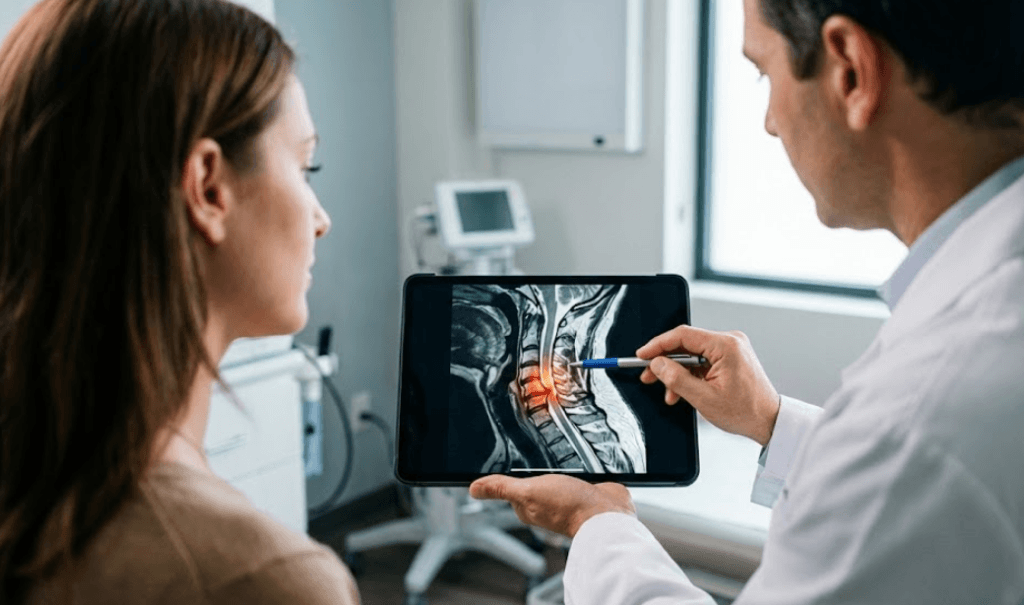
When your doctor’s notes explain how whiplash symptoms typically appear 24-48 hours post-impact or how brain swelling develops gradually, insurance companies struggle to dispute causation
Secure expert testimony
Medical professionals can validate that your delayed symptoms match typical collision injury patterns

Keep detailed personal records

An injury journal tracking symptom onset, severity changes, and treatment responses demonstrates you’re not exaggerating after the fact
What If I Already Gave a Statement Saying I Wasn’t Injured?
Many accident victims panic about this. You told the other driver, the police officer, or even the insurance adjuster that you felt fine. Now you’re injured. Does that earlier statement doom your claim?
How to Handle Previous Statements:
- Don’t panic – Earlier statements complicate the injury claim, but don’t necessarily doom your claim
- Prepare your medical explanation – Adrenaline masking pain and inflammation developing over time aren’t excuses – they’re documented physiological facts
- Have your attorney contextualize – Legal counsel can explain that you answered honestly based on how you felt at that specific moment
- Focus on medical causation – What matters most is establishing the link between current symptoms and the accident
- Maintain consistency going forward – Don’t minimize symptoms now or give additional recorded statements without legal counsel
- Avoid creating new inconsistencies – Insurance adjusters will absolutely use contradictions against you
Should I Settle Before All My Symptoms Appear?
No, you shouldn’t settle before reaching maximum medical improvement. This represents the single biggest mistake accident victims make, and it’s exactly what insurance companies hope you’ll do.
Why Waiting Protects Your Rights:
- Early offers undervalue your claim
Insurance adjusters know that delayed symptoms frequently emerge, and gamble that you’ll accept quick payment before discovering the full extent.
- Settlement agreements are final
Once signed, you’ve waived your right to additional compensation, even if you develop serious complications requiring expensive treatment.
- Maximum medical improvement matters
This means your condition has stabilized, and doctors can reasonably predict your long-term prognosis.
- Accurate valuation requires complete information
Only then can you account for all past and future medical expenses, lost wages, pain and suffering, and permanent limitations.
- Timeline extends months
For delayed injuries, reaching stability often takes much longer than the initial accident.
- Patience pays off
Accepting less money now because you’re frustrated or financially stressed almost always means leaving substantial compensation on the table.
Do I Need a Lawyer for a Delayed Injury Claim?
While technically you can handle any claim yourself, delayed injury cases strongly benefit from legal representation. Here’s why: insurance companies fight these claims harder, questioning causation, medical necessity, and symptom legitimacy at every turn.
What Attorneys Bring to Delayed Injury Cases:
- Expert case building – They know exactly how to construct compelling arguments for delayed symptom claims
- Medical expert networks – Attorneys work with specialists who can explain injury mechanisms and symptom timelines convincingly
- Documentation expertise – They understand which evidence proves causation and how to present it effectively
- Insurance tactic recognition – Experienced lawyers spot and counter strategies designed to undermine delayed symptom claims
- Mistake prevention – Legal counsel stops you from settling too early, missing filing deadlines, or giving damaging recorded statements
- Contingency fee arrangements – Most personal injury attorneys only get paid if you recover compensation, making quality representation accessible
- Increased recovery amounts – For significant injuries, legal representation typically increases your settlement substantially, even after attorney fees
When You Might Go Without a Lawyer:
- Minor delayed injuries resolve quickly with minimal treatment
- Simple claims with clear liability and cooperative insurance companies
What Evidence Should I Gather Right Now? Your Delayed Pain Evidence Checklist
Start gathering evidence immediately, even if you’re already weeks past the accident. Better late than never, and some evidence remains accessible long after the collision.
| Category | Evidence Piece | Why This Proves a Delayed Claim | Have It? |
|---|---|---|---|
| Medical | The “Nexus Letter” | A statement from your doctor explicitly writing that your current, delayed symptoms are a direct result of the car accident. | |
| Medical | Initial “Refusal of Care” Note | If you refused EMS at the scene, get the report. It often says “Patient reports no pain *at this time*,” which leaves the door open for later pain. | |
| Medical | Diagnostic Imaging (MRI/CT) | Scans can reveal “silent” injuries like herniated discs or hairline fractures that don’t always hurt immediately. | |
| Medical | Gap in Care Explanation | A documented reason for the delay (e.g., “thought it was just soreness,” “lack of childcare,” “fear of hospitals”). | |
| Visual | Progression Photos | Photos of bruising (like seatbelt marks) that darkened or spread 2-5 days after the accident. | |
| Visual | Vehicle Damage Photos | Photos of heavy vehicle damage prove the impact was severe enough to cause latent internal injuries, even if you felt fine. | |
| Witnesses | Witness Statements | Statements from passengers or bystanders confirming you looked dazed, limping, or holding your head at the scene. | |
| Communication | Texts & Social Media | Time-stamped texts to friends/family mentioning “stiff neck” or “headache” in the quiet hours/days following the crash. | |
| Personal | Work Attendance Log | Records showing you attempted to return to work but had to leave early or take days off as pain set in. | |
| Personal | Pain Journal | A daily log documenting the gradual onset of pain, proving it wasn’t a sudden, unrelated injury days later. |
Schedule a Free Delayed Car Accident Pain Consultation with Asheville Car Accident Lawyer Lakota Denton

Lakota Denton has won millions in car accident settlements and judgments for his clients throughout North Carolina. He can help guide you delayed pain claim through insurance settlement negotiations and to the courts, if necessary. Schedule your free consultation now to explore your car accident pain options.
Delayed Car Accident Pain: Frequently Asked Questions
- Why does pain start days after a crash? Adrenaline and endorphins mask initial injury symptoms. As these chemicals subside, inflammation increases, making injuries like sprains or organ bruising apparent.
- Is delayed neck pain common? Yes, whiplash symptoms often take 24–48 hours to appear. Micro-tears in neck muscles and ligaments create stiffness that peaks days after the initial impact.
- What causes late-onset headaches? Often linked to concussions, neck strain, or blood clots. These can be signs of a traumatic brain injury or cervical strain that requires neurological testing.
- Why is my back hurting days later? Soft tissue inflammation or spinal discs are finally settling. Forceful movement can herniate discs or strain lumbar muscles, causing pain once the initial shock fades.
- Is numbness a bad sign? Yes, it usually indicates nerve damage or spinal issues. Tingling in the hands or feet suggests a pinched nerve or disc protrusion that could lead to chronic loss of function.
- Should I see a doctor today? Yes, early documentation is vital for health and claims. Delaying care gives insurers an excuse to argue your injuries were caused by something else later on.
- What if I felt fine at the scene? Still get checked; internal injuries aren’t always felt. Internal bleeding or minor fractures can be life-threatening if left untreated, while the symptoms are latent.
- Does adrenaline affect pain? Yes, it blocks pain signals during “fight or flight.” This evolutionary response prioritizes survival over feeling injury, temporarily numbing even broken bones.
- Can stress cause physical pain? Shock manifests as severe muscle tension and deep aches. Psychological trauma can cause the body to remain in a state of high tension, leading to physical exhaustion.
- Will insurance cover late pain? Yes, if you seek medical care immediately upon discovery. Consistency between the accident date and your first medical report is the strongest evidence for your claim.