
After a car accident, most people don’t immediately think about legal claims. They are dealing with the shock, the inconvenience, and often the pain that follows. In the days after their accident, a common question arises?
Do I have a valid car accident claim under North Carolina law?
Under North Carolina’s strict Contributory Negligence Rule, if you’re even 1% to blame for your car accident, you may be unable to sue for damages. Understanding what qualifies as a valid claim can save you time, frustration, and potentially a significant amount of money.
It Starts with Fault, Not Just the Accident
Not every accident leads to a valid claim. The key issue is fault.
You need to be able to show that another driver caused the crash. That could mean they were speeding, distracted, following too closely, or ignoring traffic signals. If there is no clear indication that someone else made a mistake, the claim becomes difficult to pursue.
Even when the fault seems obvious at the scene, it still needs to be supported by evidence. Police reports, photos, and witness statements often carry more weight than personal opinions about what happened.
Why North Carolina Is Different from Other States When Assessing Valid Car Accident Claims
North Carolina follows a rule called contributory negligence, and it changes everything.
In many states, you can still recover compensation even if you were partially at fault. That is not the case here. If you are found to be even slightly responsible for the accident, you can lose your right to recover anything.
This is why early statements, casual comments, and even apologies at the scene can come back to hurt you later.
The Role of Injuries in Your Claim
A car accident claim is not just about the crash itself. The type of injuries the crash causes is a fundamental element of your claim.
If you walked away without injuries and your vehicle damage is minimal, there may not be much of a claim to pursue. On the other hand, if you needed medical care, missed work, or are still dealing with pain, those are signs your case may have real value.
Timing matters here. Getting medical attention soon after the accident creates a clear link between the crash and your injuries. Waiting too long gives insurance companies an opening to argue that something else caused your condition.
Factors that Strengthen a Car Accident Claim
Some claims move forward smoothly because the facts line up clearly. Others face resistance at every step.
Strong claims tend to share a few common traits:
| Factor | Why It Matters |
| Immediate Medical Treatment | Connects your injuries directly to the accident |
| Consistent Follow-Up Care | Shows your injuries are ongoing and serious |
| Clear Documentation | Photos, reports, and records support your version of events |
| Evidence of Fault | Citations or witness statements help establish liability |
| Real-Life Impact | Missed work or daily limitations increase claim value |
Common Mistakes That Undermine Insurance Claims
A surprising number of valid claims lose value because of avoidable mistakes.
One of the biggest issues is victims delaying medical treatment. It may not seem serious at first, but gaps in care often get used as evidence that your injuries are minor or unrelated.
Another common problem is talking too freely with insurance adjusters. What feels like a simple explanation can later be framed as an admission of fault.
Mistake | How It Affects Your Case |
| Waiting to see a doctor | Weakens the link between accident and injury |
| Skipping treatment appointments | Creates doubt about injury severity |
| Giving recorded statements early | Limits your ability to clarify later |
| Posting on social media | Can contradict your claims |
| Admitting partial fault | Can eliminate your claim entirely |
Avoiding these issues can make a significant difference in how your claim is handled.
What Your Claim Actually Covers
Many people assume a claim is just about getting reimbursed for medical bills. That is only part of the picture.
A valid claim can include both financial losses and the broader impact the accident has had on your life.
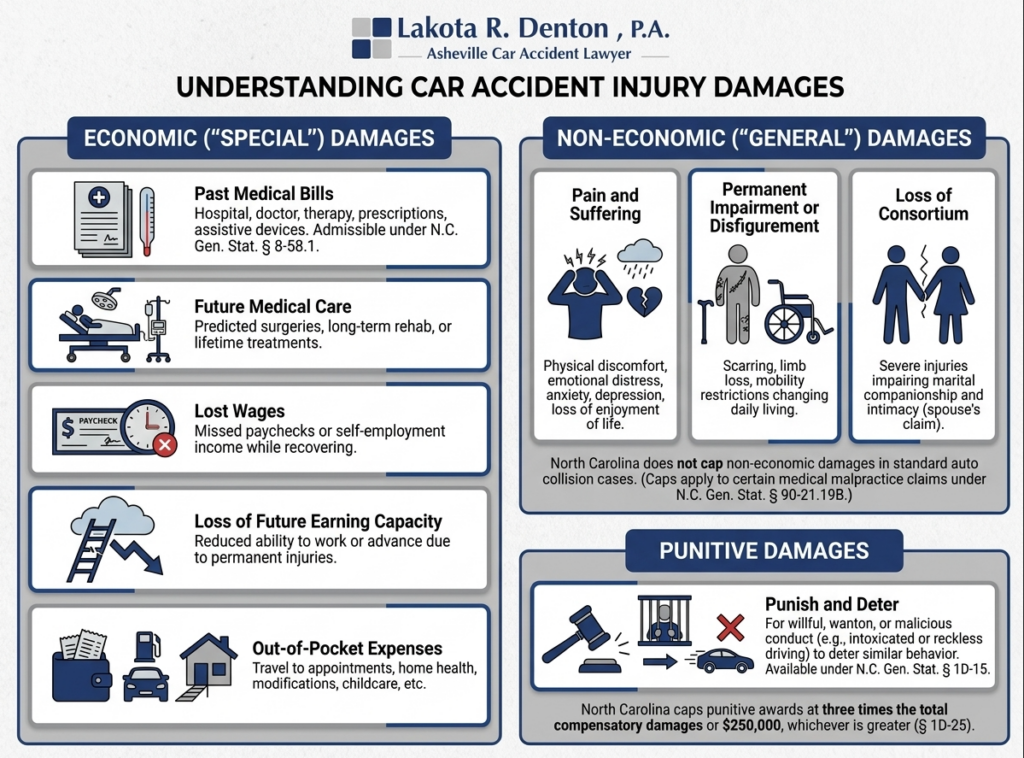
Focusing only on out-of-pocket costs often leads to insurance companies undervaluing the claim.
If you want a deeper look at how these amounts are evaluated, you can read more about how personal injury compensation is calculated.
The Simple Process to Evaluate a Car Accident Injury Case
If you are still unsure where you stand, a quick self-check can help clarify things.
- Was the other driver clearly at fault
- Did you receive medical treatment shortly after the accident
- Do you have photos, reports, or other documentation
- Have your injuries affected your ability to work or go about your daily life
- Can you avoid being blamed for any part of the accident
If most of these lean in your favor, there is a good chance your claim is worth pursuing.
When Should I Get Legal Advice About My Potential Car Accident Case?
Some situations are straightforward. Others are not.
If fault is being disputed, your injuries are more than minor, or if the insurance company is pushing back, it may be time to get guidance from a lawyer. Early advice can help you avoid mistakes that are difficult to fix later.
You can also learn more in our recent blog post about the process of what to do after a car accident in North Carolina.
Talk to a North Carolina Car Accident Lawyer
If you are questioning whether your claim is valid, you are not alone. Most people do not have enough information early on to make that call with confidence.
A consultation can help you understand where you stand and what steps to take next. Lakota Denton has helped clients navigate complex accident claims, identify risks early, and build cases that stand up to insurance scrutiny. From proving fault to documenting injuries and avoiding common mistakes, having the right legal guidance can be the difference between a denied claim and meaningful compensation.
If you are unsure about your situation, taking the next step now can help protect your claim before critical mistakes are made.
Schedule a free consultation today and get clear answers about your case.
FAQs For Evaluating Potential Car Accident Cases in North Carolina
What if I didn’t go to the doctor right away after the accident?
Delaying medical treatment can hurt your case, as insurance companies may argue your injuries weren’t caused by the accident.
Should I talk to the insurance company before speaking with a lawyer?
It’s best to be cautious. Insurance companies may try to minimize your claim, so speaking with a lawyer first can help protect your rights.
How does the “last clear chance” doctrine affect my car accident case in North Carolina?
Even if you were partially at fault, you may still recover compensation if you can prove the other driver had the last clear chance to avoid the accident but failed to do so.
What role does joint and several liability play in multi-vehicle accidents?
North Carolina allows you to pursue full compensation from any one negligent party, even if multiple drivers contributed to the crash, leaving them to sort out contribution among themselves.
How does North Carolina treat claims involving employer-owned vehicles?
If the driver was acting within the scope of employment, the employer may be held liable under respondeat superior, significantly increasing available insurance coverage.
How do lien claims affect my settlement in North Carolina?
Medical providers, health insurers, and government programs may assert liens on your recovery, which must be negotiated and resolved before you receive funds.
How does failure to mitigate damages impact my claim?
If you don’t follow medical advice or reasonably try to recover, the defense may argue that your compensation should be reduced because you worsened your own condition.